Coromandel wood or Calamander wood
is a valuable wood from India, Sri Lanka and South East Asia. It is of a hazel-brown color, with black stripes (or the other way about), very heavy and hard. It is also known as Macassar Ebony or variegated ebony and is closely related to genuine ebony, but is obtained from different species in the same genus; one of these is Diospyros quaesita Thwaites, from Sri Lanka. The name Calamander comes from the local sinhalese name, 'kalu-medhiriya', which means dark chamber; referring to the characteristic ebony black wood.
Coromandel wood has been logged to extinction over the last 2 to 3 hundred years and is no longer available for new work in any quantity. Furniture in coromandel is so expensive and so well looked after that even recycling it is an unlikely source. A substitute, Macassar Ebony, has similar characteristics and to the untrained eye is nearly the same but it lacks the depth of colour seen in genuine Coromandel.
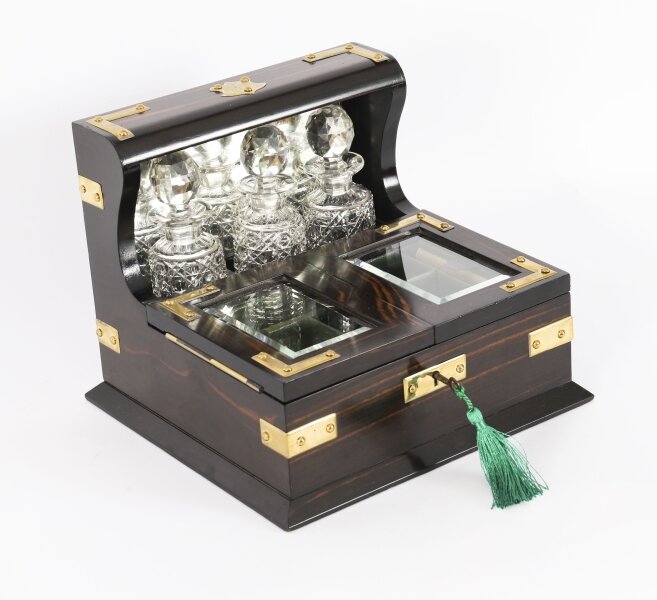
Tantalus
is a type of liquor decanter in which the bottle stoppers are locked down tightly by a metal bar. This was to prevent the theft of the contents by servants. Like the name suggests, the decanters themselves are visible, drawing temptation while unattainable. A key is required for entry.
The most common types of tantalus holds three bottles or decanters while there are also smaller types housing only two. There are many different forms of tantalus. Often the encasement has metal handles on both sides and ornately carved decor. Crystal and metal versions are also a beautiful option when choosing a tantalus.
Tantalus derived its name from the story of the mythological Greek king, Tantalus, mortal son of Zeus and Pluto. To be tantalized is to be tempted with the unattainable, and the king was sorely tested. He was condemned to an eternity in Hades for angering the Gods and was forced to stand forever in water that, when he bent to drink, would recede and to gaze upon foods he could only reach for and never grasp.
The 1800s saw our Victorian predecessors apply the King’s name to the lockable decanter.
Tantalus
is a type of liquor decanter in which the bottle stoppers are locked down tightly by a metal bar. This was to prevent the theft of the contents by servants. Like the name suggests, the decanters themselves are visible, drawing temptation while unattainable. A key is required for entry.
The most common types of tantalus holds three bottles or decanters while there are also smaller types housing only two. There are many different forms of tantalus. Often the encasement has metal handles on both sides and ornately carved decor. Crystal and metal versions are also a beautiful option when choosing a tantalus.
Tantalus derived its name from the story of the mythological Greek king, Tantalus, mortal son of Zeus and Pluto. To be tantalized is to be tempted with the unattainable, and the king was sorely tested. He was condemned to an eternity in Hades for angering the Gods and was forced to stand forever in water that, when he bent to drink, would recede and to gaze upon foods he could only reach for and never grasp.
The 1800s saw our Victorian predecessors apply the King’s name to the lockable decanter.